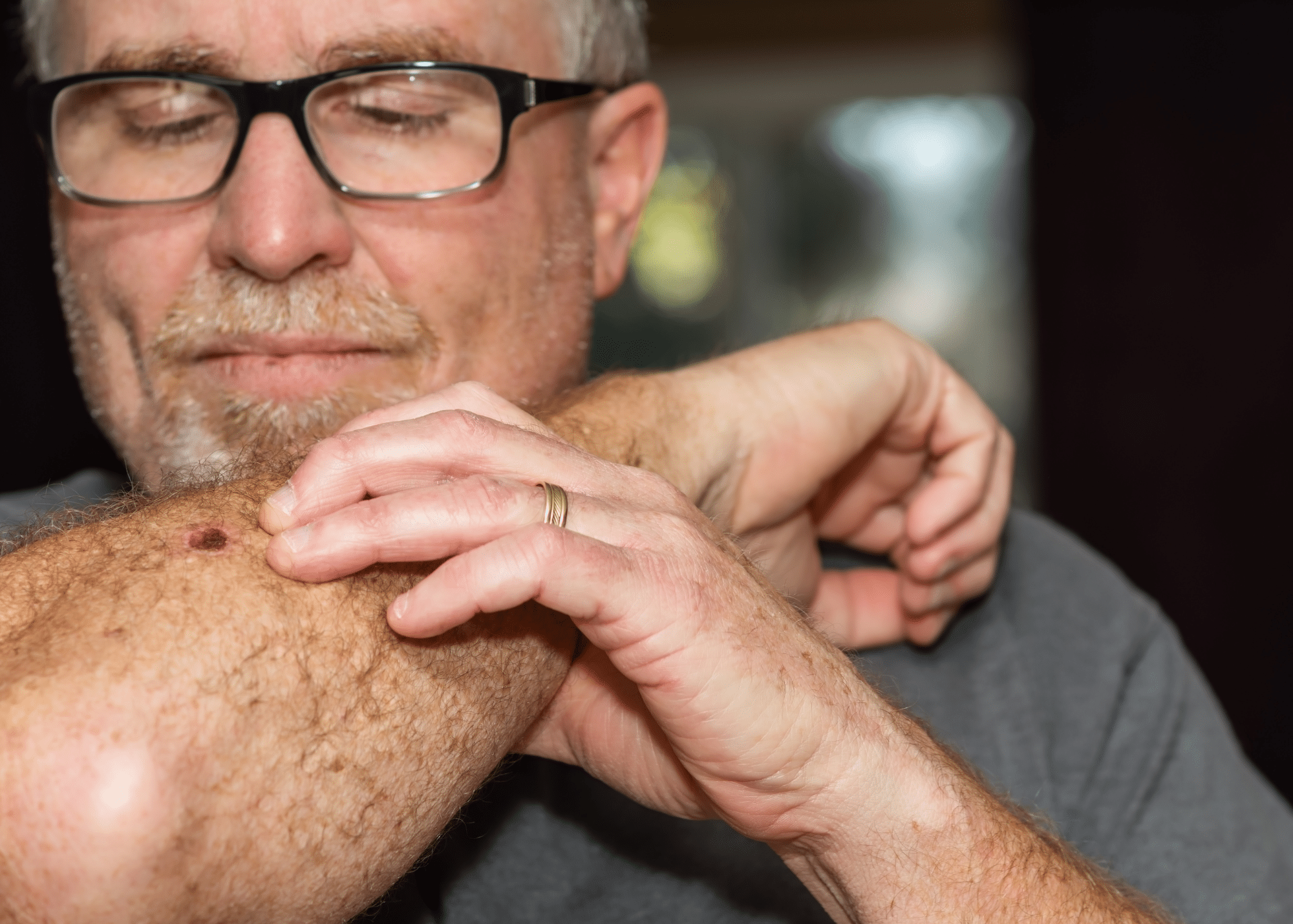
Skin cancer is the most common type of cancer in the United States, and for many patients, the treatment doesn’t end with removing the cancer. When a lesion occurs on the face, scalp, hands, or other visible or delicate areas, excision can leave a noticeable wound or deformity. That’s where skin cancer reconstruction plays a critical role.
Reconstructive surgery after skin cancer isn’t just about aesthetics. It’s about restoring function, preserving facial identity, and helping patients return to their lives confidently and comfortably. At Plastic Surgeons of Northern Arizona, we specialize in skin cancer removal and advanced reconstruction techniques, offering patients seamless care and long-term results.
Skin cancer surgery—especially Mohs micrographic surgery—can leave behind a defect that varies in size, depth, and location. While many small excisions can heal naturally or with minor sutures, others require more complex reconstruction to restore natural contours, symmetry, and skin movement.
Reconstructive surgery is often needed when:
- The cancer occurs on the face, eyelids, nose, lips, ears, or scalp
- A large area of tissue was removed to ensure clean margins
- The wound impacts a function such as breathing, speaking, or closing the eyes
- Natural healing would result in significant scarring or distortion
Our goal in reconstruction is to close the wound while maintaining the integrity, motion, and appearance of the area, whether it’s reshaping the nose after basal cell carcinoma or restoring the eyelid to protect vision.
When Does Reconstruction Happen?
Reconstruction typically occurs immediately after cancer removal, often the same day. This is especially common when working in tandem with a Mohs surgeon. Once the skin cancer is entirely removed and clean margins are confirmed, we can begin rebuilding the area.
Reconstruction may be staged over multiple procedures in some cases, such as significant or recurrent cancers. We always evaluate the best timing and approach for your unique situation.
Types of Skin Cancer Reconstruction Techniques
Every reconstruction is tailored to the size, location, depth, and shape of the defect, as well as the patient’s goals and overall health. Here are some of the most common techniques we use.
Primary closure
The skin can often be gently pulled together and sutured closed for small, linear wounds. This method leaves a fine-line scar and heals relatively quickly. It’s commonly used on the trunk, extremities, and less mobile face areas.
Skin grafts
Sometimes, we may take a thin layer of healthy skin from another part of the body, often behind the ear or from the upper thigh, and transplant it over the wound. Grafts are beneficial when nearby skin is too tight or fragile to move, or when suturing the wound closed would produce significant facial distortion. They are commonly used for larger scalp or extremity defects.
Local tissue flaps
This technique involves skin and tissue adjacent to the wound to close the defect. The flap is rotated, advanced, or repositioned to match skin tone, texture, and thickness. Flaps offer excellent cosmetic results and are frequently used for nasal, lip, cheek, and forehead reconstruction.
Cartilage or structural grafts
When cancer removal affects the nose, ear, or eyelid, we may need to rebuild underlying structures using cartilage from the ear or rib. This helps restore form and function, especially in areas that rely on support to maintain shape or movement.
Staged reconstruction
For larger or more complex wounds, reconstruction may require multiple surgeries to achieve the best outcome. This allows us to rebuild the area and optimize appearance and function gradually.
What to Expect from Recovery
Recovery after skin cancer reconstruction depends on the size of the defect, the technique used, and your overall health. Most patients can return to normal activities within 1 to 2 weeks, though more involved reconstructions may require additional healing time.
During recovery, you can expect:
- Swelling and bruising, particularly on the face or near the eyes
- Stitches that are removed within 5 to 10 days
- Mild discomfort managed with over-the-counter or prescription medication
- Activity restrictions for the first week to support healing
We’ll provide detailed post-operative instructions and follow-up appointments to monitor your progress and ensure optimal healing.
Scar Management and Long-Term Results
Scarring is a natural part of the healing process, but our techniques are designed to minimize visible scarring as much as possible. When placing incisions, we follow the natural lines and contours of the face to help scars blend in over time.
We may recommend additional treatments to improve the appearance of scars, including:
- Silicone gel sheets or topical scar creams
- Laser therapy or resurfacing for color and texture
- Steroid injections for raised or thickened scars
- Revision surgery in rare cases, if healing was not optimal
With proper care, most scars fade significantly within 6 to 12 months and become barely noticeable to others.
Emotional and Psychological Impact
The effects of skin cancer go beyond the physical. For many patients, especially those with visible facial wounds, the emotional impact can be just as significant. Reconstruction can help rebuild self-confidence, reduce anxiety about appearance, and restore a sense of normalcy.
We approach each patient with sensitivity, respect, and a commitment to restoring their physical health and overall well-being. Our team is always available to answer questions, offer reassurance, and help you navigate this journey with clarity and compassion.
Working with a Reconstructive Plastic Surgeon
Choosing a board-certified plastic surgeon for skin cancer reconstruction ensures you have an expert who understands surgical technique and aesthetic detail. At Plastic Surgeons of Northern Arizona, we work closely with dermatologists and Mohs surgeons to coordinate care and provide seamless treatment plans.
We specialize in:
- Complex facial reconstruction after Mohs surgery
- Nasal, eyelid, lip, and ear reconstruction
- Revision of poorly healed or scarred previous excisions
- Reconstructive planning for high-risk or recurrent cancers
Whether your concern is minor or extensive, our goal is always the same: to restore form and function in a way that supports your long-term confidence and health.
Schedule a Consultation
If you’ve been diagnosed with skin cancer or are preparing for Mohs surgery, we encourage you to meet with our team to discuss your reconstruction options. Early consultation allows us to collaborate with your care team, plan ahead, and ensure the smoothest path forward.
Let us help you heal—not just the wound, but the whole picture.
Contact us today to schedule a consultation and learn more about skin cancer reconstruction at Plastic Surgeons of Northern Arizona.