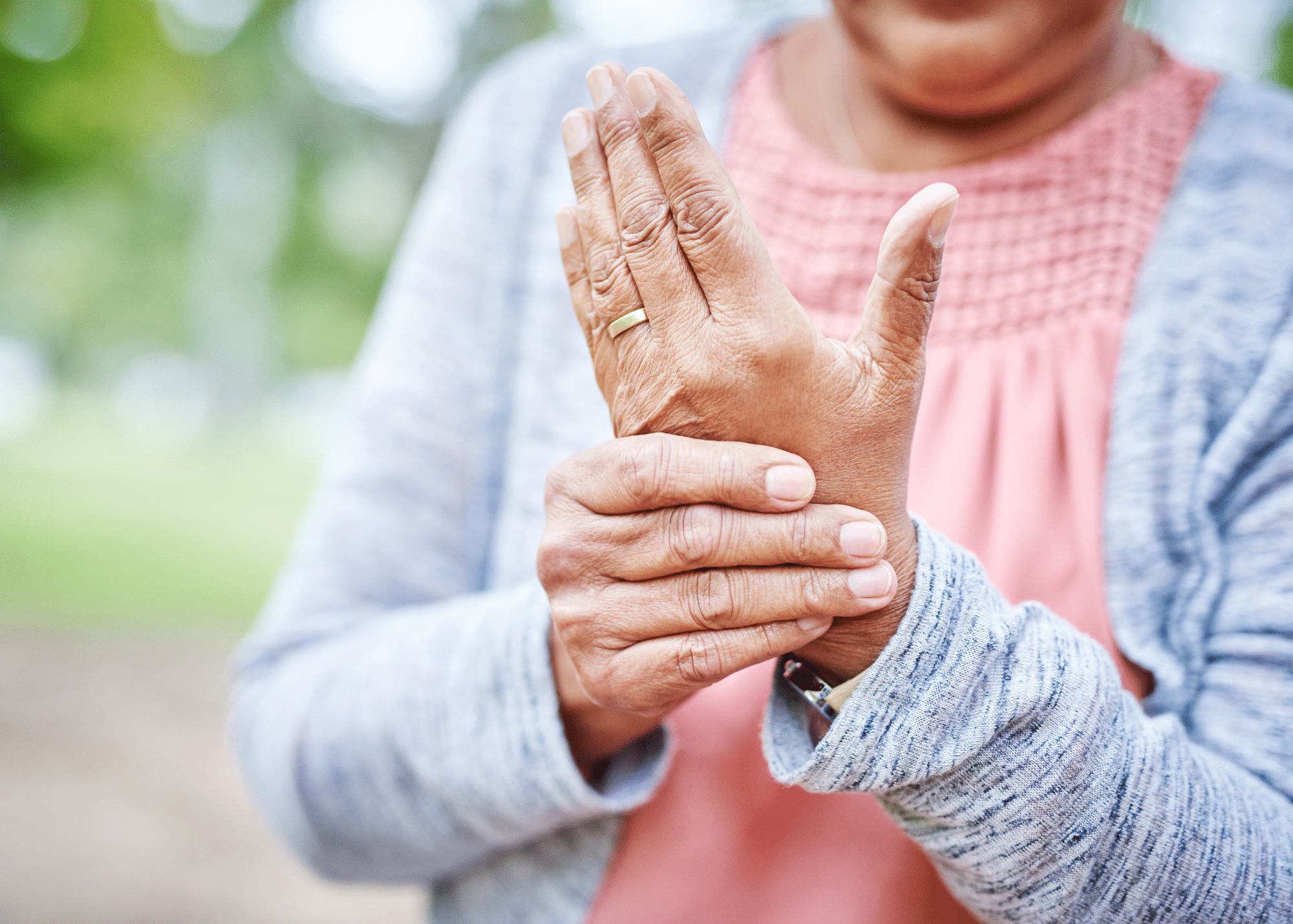
When temperatures drop, many people living with hand arthritis notice their symptoms getting worse. Cold weather can trigger stiffness, pain, and reduced mobility, making daily tasks like buttoning a shirt or gripping a coffee mug more challenging.
While the exact reason for winter flare-ups isn’t fully understood, research suggests that changes in barometric pressure, decreased circulation, and muscle tension in cold conditions may all contribute. Fortunately, both surgical and non-surgical strategies can help you manage symptoms year-round and keep your hands functioning at their best.
Hand arthritis occurs when the smooth cartilage that cushions your joints wears away, leading to friction, inflammation, and pain. The most common types affecting the hands are:
- Osteoarthritis (OA) – age-related wear-and-tear that often affects the base of the thumb (CMC joint) and finger joints.
- Rheumatoid arthritis (RA) – an autoimmune condition that can damage joint lining and cause deformity.
- Post-traumatic arthritis – develops after an injury such as a fracture or ligament tear.
Common symptoms include joint pain, swelling, stiffness, decreased grip strength, and visible changes in joint shape. These symptoms can worsen in colder months.
For a deeper overview of conditions we treat, see the hand and wrist surgery page on psna.net.
Why Winter Can Worsen Symptoms
Several theories may explain why arthritis flares in the winter:
- Barometric pressure changes may cause joint tissues to expand or contract, aggravating pain-sensitive nerves.
- Cold-induced vasoconstriction reduces blood flow to extremities, potentially increasing stiffness.
- Muscle tightness in cold weather may reduce joint flexibility.
- People tend to move less in winter, which can worsen stiffness and joint discomfort.
Non-Surgical Strategies to Prevent Winter Flare-Ups
For many patients, non-surgical measures can greatly improve hand function and reduce seasonal discomfort.
1. Keep Hands Warm and Protected
Wearing insulated gloves or mittens outdoors and using therapeutic heated gloves indoors can help maintain joint flexibility. Disposable hand warmers can provide extra relief in cold environments.
2. Maintain Gentle, Regular Movement
Low-impact hand exercises help maintain range of motion and blood flow. Examples include:
- Making a gentle fist and then extending your fingers
- Thumb opposition exercises (touching each fingertip to the thumb)
- Wrist circles
A hand therapist can design a program tailored to your needs.
3. Use Adaptive Devices
Jar openers, ergonomic pens, and kitchen tools with larger grips can reduce stress on arthritic joints.
4. Topical and Oral Medications
Topical NSAIDs, such as diclofenac gel, can provide localized pain relief with minimal systemic effects. Studies have also demonstrated good results with topical CBD ointments for improvement in hand arthritis pain. Oral NSAIDs or acetaminophen may also be recommended for flare-ups, under your physician’s guidance.
5. Occupational or Physical Therapy
Therapists can teach joint-protection techniques, fabricate custom splints, and recommend strengthening exercises.
6. Corticosteroid Injections
For severe seasonal pain, steroid injections can reduce inflammation in the joint for weeks to months. These are performed in-office and can be repeated periodically, though frequency is limited to avoid cartilage damage.
When Surgery Becomes an Option
If conservative treatments no longer provide adequate relief and arthritis significantly impacts your quality of life, surgery may be considered. Surgical goals are to reduce pain, improve function, and prevent further joint damage.
Common Surgical Options for Hand Arthritis
Thumb CMC Arthroplasty
Arthritis at the base of the thumb is common and can be disabling. CMC arthroplasty involves removing damaged bone and reconstructing the joint using a tendon graft or implant. Studies show this procedure can significantly improve pain and grip strength.
Fat grafting
Harvesting fat from a patient and injecting it into a joint space can be an effective treatment for arthritis pain with minimal downtime. Studies have shown that the fat cells have the ability to change into new cartilage, providing long term relief with minimal downtime.
Joint Fusion (Arthrodesis)
In advanced arthritis, fusion permanently joins the bones of the affected joint, eliminating pain but also removing motion in that joint. This can be a good choice for smaller joints where motion loss has minimal functional impact.
Joint Replacement (Arthroplasty)
Some finger joints, particularly the knuckles, can be replaced with silicone or pyrocarbon implants, preserving some motion while relieving pain.
Synovectomy
In inflammatory arthritis, such as RA, removing the inflamed joint lining (synovium) can reduce pain and swelling, especially in earlier stages.
Preparing for Surgery
If your surgeon recommends a procedure, winter can actually be a strategic time to have it done — reduced outdoor activity means less disruption to your lifestyle during recovery.
Before surgery, your care team will:
- Review your overall health and medical history
- Discuss your surgical options, risks, and expected outcomes
- Provide instructions on home preparation (e.g., setting up a recovery area, arranging help for daily tasks)
You can read more about surgical care on our Plastic Surgeons of Northern Arizona hand surgery page.
Recovery and Rehabilitation
Postoperative care depends on the specific procedure but often includes:
- Immobilization in a splint or cast for several weeks
- Gradual progression to gentle range-of-motion exercises
- Supervised therapy to restore strength and dexterity
- Activity modifications to protect healing joints
Most patients see improvement in pain and function within a few months, though full recovery may take 6–12 months.
Lifestyle Tips for Year-Round Hand Health
Whether or not you’ve had surgery, protecting your joints year-round can minimize flare-ups:
- Stay active: Gentle, regular movement keeps joints lubricated.
- Eat an anti-inflammatory diet: Foods rich in omega-3 fatty acids, antioxidants, and lean protein may help reduce joint inflammation.
- Manage weight: Excess weight increases stress on weight-bearing joints, and systemic inflammation can affect all joints.
- Avoid smoking: Smoking impairs circulation and slows healing.
- Protect hands from injury: Use proper form during activities and wear protective gloves when necessary.
Winter can be tough for people with hand arthritis, but you’re not powerless against seasonal flare-ups. By combining simple preventive measures — like keeping hands warm, using adaptive tools, and staying active — with medical interventions ranging from splints to targeted injections, you can maintain comfort and function even in the coldest months.
If pain persists despite conservative care, surgical options like CMC arthroplasty, joint fusion, or joint replacement can offer long-term relief and restore your ability to use your hands comfortably.
To explore both non-surgical and surgical options, schedule a consultation with our hand specialists at PSNA to create a treatment plan tailored to your needs.
Author Profile: Brian Cripe, M.D., is an award-winning, board-certified plastic and reconstructive surgeon and Plastic Surgeons of Northern Arizona partner. Dr. Cripe specializes in cosmetic surgery, limb salvage, peripheral nerve microsurgery, hand surgery, and oncologic reconstructive procedures.